MTTR from the CMMS measures the time between a work order opening and closing, which is the technician's work. A breakdown on the floor is four periods: stop to call, call to technician, repair, and restart to the first good part. A small IoT device on the machine's signals timestamps the stop and the restart; the operator's one-tap reason timestamps the call. Split that way, per machine, the waits are usually longer than the repairs, and each has a cheaper fix than a faster technician.
One number, several clocks
Ask a maintenance manager for the plant’s MTTR and the answer comes from the CMMS: the average time between a work order being opened and being closed. It is a real number, and the work order it comes from covers only the middle of the story. Before it, the machine stopped and for a while nobody knew whether it was a breakdown at all. After it, the technician signed off and the machine still took its time to make a part that quality would accept.
In our experience a breakdown on the floor is four periods laid end to end: the time between the stop and the moment someone decides it is a maintenance call; the time between that call and a technician standing at the machine; the repair itself; and the restart, up to the first good part. The report sees one of them, sometimes two. The production manager feels all four: the parts not made are missing at the end of the shift whichever period they belong to.
Why the work order cannot see it
The work order is written by people who were busy fixing the machine, not watching the clock. The stop time is the operator’s memory, rounded to the quarter hour. The opening time is when the technician reached the terminal, not when he was called. The closing time is when the paperwork was done, before the restart or well after it.
None of this is carelessness. The operator tries things first: a reset, a cleaning, a word with the setter. Only when those fail does the stop become a call, and the minutes before it belong to nobody’s record. The technician may be on another machine when the call comes, and the wait for him is not his repair time, so he does not write it down. The slow restart lands in somebody else’s column, or in none. So MTTR can improve from one month to the next while the line waits longer: the number measures the technician’s work, usually the shortest and best-run part of the whole stop.
Reading the whole stop from the machine
The machine itself keeps a better clock, and reading it does not take a project. A small IoT device goes on the machine’s electrical signals; an electrician installs it in under an hour; no PLC connection, no change to programs; the plant’s own people can do it. The signals are the same on every machine: running, stopped, cycle, count. What differs is the machine, the process, the product and the operating environment, even for two presses standing side by side. The Universal Adapter, in the cloud, interprets the same signals with the context of that specific machine.
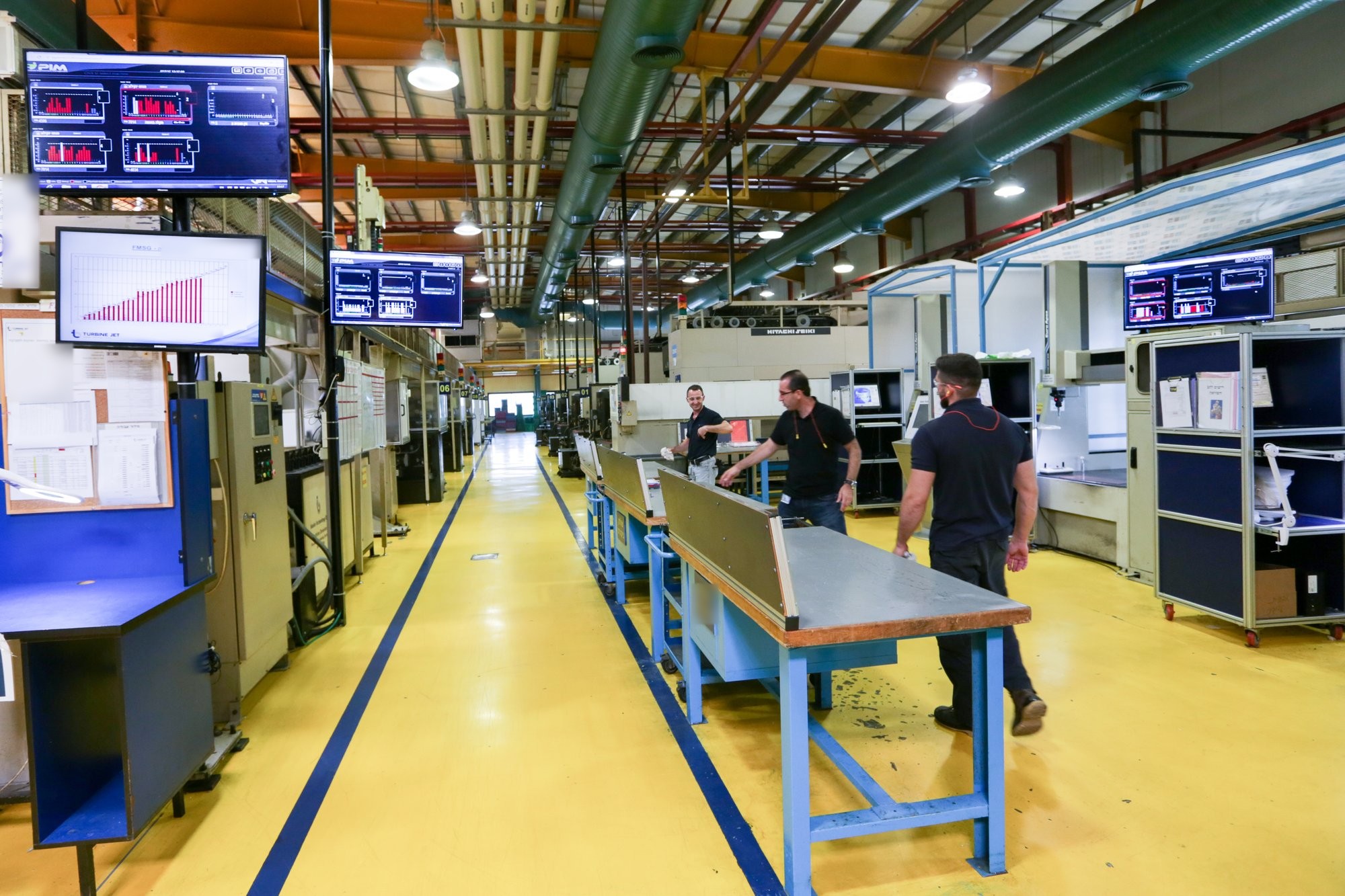
With that in place the periods get real timestamps. The running signal goes down: that is the stop, to the second. The operator tags the reason on the floor monitor in one tap, and the moment he taps “maintenance” is the moment the call exists; it lands on the technician’s phone with the machine and the reason. The running signal comes back and the count settles at the normal cycle: that is the end of the restart, read from the same signal. Whether the time in between was waiting or work is the one line the technician still fills in, on the task, when he gets to the machine. Every breakdown in the Condition-Based Maintenance product arrives split into waiting, work and restart, per machine, per shift.
What the first weeks usually show
The plants we connect usually learn something uncomfortable in the first weeks: the waits are longer than the repairs. The wait before the call is longest where one operator runs two or three machines and the stopped one is not the one he is standing at. The wait for the technician is longest on the night shift, when maintenance is on call rather than on site. The repair itself is often short; what makes it long is the walk to the stores, the part that is not on the shelf, the drawing nobody can find.
The second thing that shows is that MTTR on its own ranks the wrong machines. A machine that stops once a month for four hours and one that stops four times a week for twenty minutes have very different MTTR and may cost the plant the same hours. Ranking the fleet by hours lost to maintenance stops, which is MTBF and MTTR read together per machine, usually puts a different machine at the top of the list. That is the machine to start with.
Shortening the right part
Once the stop is split, each part has its own fix, usually cheaper than a faster technician.
- Long wait before the call. Let the machine make the call. A stop that runs past a set number of minutes without a tagged reason alerts the supervisor on the floor monitor and the phone; a stop tagged “maintenance” reaches the technician without the operator leaving the cell to find him.
- Long wait for the technician. Put the machine, the reason and the history on his phone, and let the day’s orders say which stopped machine matters most: the one making the part that ships tonight comes first.
- Long repair. The three machines with the most repair hours usually share a short list of parts; keeping those parts at the cell rather than in the stores takes the walk out of the repair.
- Long restart. Agree what a good restart looks like for that machine, who releases the first piece and how long it should take, and measure it like the rest.
The CMMS stays the system of record. A finding on the machine becomes a task with an owner and a due date, or is pushed to the CMMS as a work order that already carries the real stop and restart times. The MTTR and MTBF of that machine in the following weeks say whether the fix held, read from the same signals, with nobody’s memory in between.
What we learned
MTTR from the work order is the technician’s number. The hours a plant loses to breakdowns sit in the parts of the stop that nobody writes down: the minutes before someone decides it is a breakdown, the walk, the wait for a part, the restart. The machine’s own signals time all of them, and once a breakdown is split into waiting, work and restart per machine, the longest part is rarely the repair. If your monthly MTTR looks fine and your lines still lose hours to breakdowns, bring it to a demo and we will show you what the same stop looks like when the machine keeps the clock.
Questions people ask
Why does MTTR from the CMMS not match the hours the line loses to breakdowns?
The work order measures the time between opening and closing, which is mostly the technician's repair. The minutes before someone decides the stop is a breakdown, the wait for the technician and the restart up to the first good part are not on it, and in our experience they are usually longer than the repair.
How can the stop and restart times be measured without a PLC connection?
A small IoT device on the machine's electrical signals, installed by an electrician in under an hour, reads running, stopped, cycle and count. The running signal dropping is the stop; the count settling at the normal cycle is the end of the restart. The operator's one-tap reason on the floor monitor is the moment the call exists.
Does this replace the CMMS?
No. The CMMS stays the system of record for assets, work orders and spare parts. Visual Factories is the system of condition: it times the stop, splits it into waiting, work and restart, turns a finding into a task with an owner and a due date, or pushes it to the CMMS as a work order with the real times already on it.