
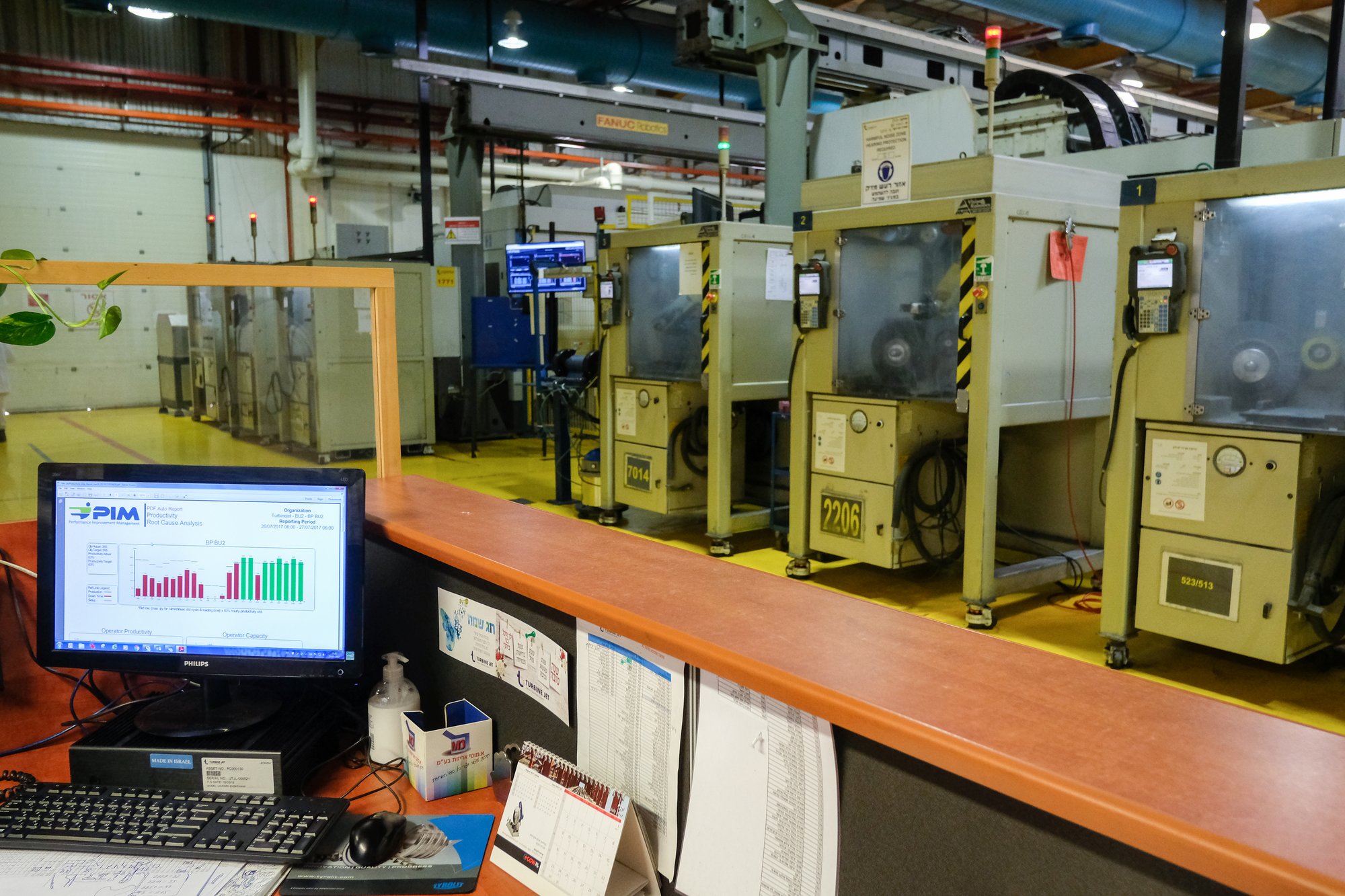
OEMs run supplier KPI reporting on spreadsheets: each supplier re-types OEE, MTBF, MTTR and days on hand from its MES / ERP into Excel, the OEM consolidates hundreds of files, and the numbers are weeks old and computed hundreds of different ways by the time anyone reads them. A supplier-installed, read-only client on the supplier's own server reads the agreed views of its database and the Visual Factories Cloud computes the five KPIs with one definition for every supplier, delivered live through dashboards, reports, alerts and API. Suppliers agree because nothing from outside touches their database, they see their own KPIs, and they can revoke the connection at any time. Start with ten sites; a site is live about ten days after the supplier's approval.
The report that is always late
Every OEM supply-chain team we have worked with asks its suppliers for the same handful of numbers: OEE, MTBF, MTTR, and how many days of finished goods and raw materials are on hand. Every supplier delivers them. And almost every one of those numbers reaches the OEM the same way — somebody at the supplier pulls them out of the MES or the ERP, types them into a spreadsheet, and sends the file at the end of the month.
By the time the file is read, the month is over. The number that mattered — a line whose MTBF has been falling since the second week, a raw-material cover that dropped below five days — is read when it can no longer be acted on. In our experience the supplier spends one to two days a month producing the report, the OEM spends as much again consolidating hundreds of files and chasing the late ones, and the data is two to six weeks old when it is finally used.
The numbers already exist, in the supplier’s MES and ERP
The part people forget is that nothing in the spreadsheet is new. OEE comes from production and quality records the MES keeps every shift. MTBF and MTTR come from the downtime events logged at each end-of-line. Days on hand come from inventory tables the ERP updates every time a pallet moves. The spreadsheet is a hand-made copy of data that already sits in a database, and every copy adds a delay, a unit mix-up, a wrong period, and one more way of calculating the same KPI.
Across a supplier base, that last point is the quiet killer. Three hundred suppliers compute OEE three hundred ways. The numbers sit in one table at the OEM and look comparable; they are not. Ranking suppliers, spotting a trend, or deciding where to send a quality engineer on the strength of those numbers is guesswork dressed as data.
What the OEM actually sees
The alternative is to read the source. The supplier installs a small, read-only client on its own server — a Windows service, installed by its database administrator in an hour or two — and gives it a connection string scoped to a few views: production, quality, downtime events, inventory. The client reads only those views and sends them, outbound, to the Visual Factories Cloud. Nothing from outside ever touches the supplier’s database, and nothing is typed by anyone.
From that point the five KPIs are computed in one place, with one definition, for every supplier. OEE and days on hand at site level; MTBF and MTTR per end-of-line, rolled up to the site. The OEM sees every supplier on one screen, gets the weekly report without asking for it, receives an alert when a site’s raw-material cover drops below the threshold, and can pull the same numbers into its own systems through an API. The question in the supplier review stops being “is this number right?” and becomes “what happened at this site last week?”
Why suppliers agree to it
The obvious objection is that no supplier wants a customer reading its database. In practice the objection goes away when three things are true. The access is read-only and scoped — the supplier creates the views, the supplier creates the connection string, the client can only run SELECT queries against what it was given. The connection is the supplier’s to keep or to cut: it lives on their server, outbound only, no VPN, no inbound port, and they can revoke it or stop the service at any time. And the supplier gets something back — the same five KPIs for its own site, computed the same way as everyone else’s, validated against its own report in the first week.
There is a second reason suppliers say yes that is rarely written down: the monthly report was costing them one to two days a month of a person they would rather have on the floor. Retiring the spreadsheet is a favour to both sides.
How to start without a programme
This does not need a transformation. It needs the OEM to nominate ten sites, obtain each supplier’s approval for read-only access, and confirm the KPI definitions once, for everyone. A site is typically live about ten days after its approval: the supplier connects in the first three days, a week of KPIs runs in parallel with its own report so differences can be resolved and the definitions frozen, and then the spreadsheet is retired. Sites are connected in parallel, so a first wave of ten to twenty is usually live within a month. The OEM supply-chain visibility product is built around exactly this: every supplier, every KPI, no spreadsheets. If you want to talk it through with someone who has sat on both sides of the table, write to us.
What we learned
Supplier KPI reporting is not a data problem. The data has been in the supplier’s MES and ERP all along. It is a copying problem — hundreds of people copying the same five numbers into hundreds of files, late, and each in their own way. Stop the copying, read the source once, and the OEM gets numbers it can act on in the week they happen. The suppliers get their days back.
Questions people ask
Does the OEM get access to the supplier's database?
No. The supplier installs a read-only client on its own server and gives it a connection string scoped to a few views it creates for this purpose. The client issues SELECT queries only, talks outbound on a single port, and the supplier can revoke the connection or stop the service at any time.
Which KPIs are delivered?
OEE and finished-goods and raw-materials days on hand at site level, and MTBF and MTTR per end-of-line, rolled up to the site — computed with one definition for every supplier.
How long until a supplier site is live?
About ten days after the supplier's approval: the supplier connects in the first three days, a week of KPIs runs in parallel with its own report, and then the site appears in the dashboard with reports, alerts and API switched on.