Plants in one group usually measure OEE differently: what counts as planned, where the number comes from, which hours are the base. A head-office template does not fix it, because it changes how the number is written down, not how it is produced. The fix starts on the machine: the same four electrical signals on every machine, connected the same way by the plant's own electrician, interpreted with each machine's context, then one set of definitions from the group and local reason codes in each plant. The number the plant sees is the number head office sees.
The monthly pack that nobody trusts
The situation is familiar to anyone who has sat in a group operations review. Four or five plants in as many countries, each sending a monthly pack with an OEE number produced in good faith. And nobody in the room is willing to compare them, because everyone knows that the plant in Mexico counts changeovers as planned downtime, the plant in Italy does not, and the plant in Malaysia reports availability against staffed hours rather than scheduled hours. The plant managers defend their figures, and the meeting ends with the question it started with: which plant is actually doing better, and why?
In our experience this is the normal state of a multi-plant group, not a failing one. Each plant built its reporting when it was the only plant that mattered, usually a spreadsheet fed by operators’ log sheets and a supervisor’s end-of-shift estimate. The numbers are consistent within a plant over time, which is what the plant needed. They were never designed to be compared across sites.
Why plants measure differently, and why it is not their fault
The differences are rarely about honesty. They are about definitions and data collection. Three things vary most in the plants we see.
- What counts as planned. Changeovers, trials, cleaning, meetings, breaks: every plant draws the line somewhere else, and the line moves when a new plant manager arrives.
- Where the number comes from. One plant has counters on the presses, another relies on the ERP booking, a third on paper. A stop of four minutes exists in one plant and is invisible in the other two.
- Which hours are the base. Scheduled time, staffed time, calendar time. A plant that runs two shifts and reports against staffed hours will always look better than its sister on three shifts reporting against calendar time.
A reporting template from head office does not fix this. We have seen groups issue a definition document and a common spreadsheet, and a year later the numbers were still not comparable, because the template changes how the number is written down, not how it is produced.
The same signals, in every plant, connected the same way
One view across plants has to start where the losses happen: on the machine. The electrical signals that describe production are the same on every machine in every plant: running, stopped, cycle, count. A press in Mexico, a moulding machine in Italy and a machining centre in Malaysia all give those four signals. What differs is the machine, the process, the product and the operating environment, even for two presses standing side by side in the same hall. The Universal Adapter, in the cloud, interprets the same four signals with the context of that specific machine: what a normal cycle time is, what a short stop means on that process.
The connection is deliberately simple, which matters more in a group than in one plant. A small IoT device sits on the machine’s electrical signals. The plant’s own electrician installs it in under an hour. There is no PLC connection and no change to any program, so no plant has to open a project with its machine suppliers, and corporate IT has nothing to roll out on the plant network. The plants we connect usually do it themselves, the same way, whatever the country or the machine. That is the point: when the method is the same everywhere, the data is the same everywhere, and every one of the products on the platform works from that one set of data.
One standard, local ownership
Once every machine reports the same way, the group can agree definitions once and apply them everywhere. In our experience this works best when head office owns the frame and the plants own the detail. Head office decides what availability is measured against, which categories are planned and how OEE is calculated. Each plant keeps its own downtime reasons inside those categories, in its own language, because the people who enter the reason and act on it stand next to the machine, not in the group office.
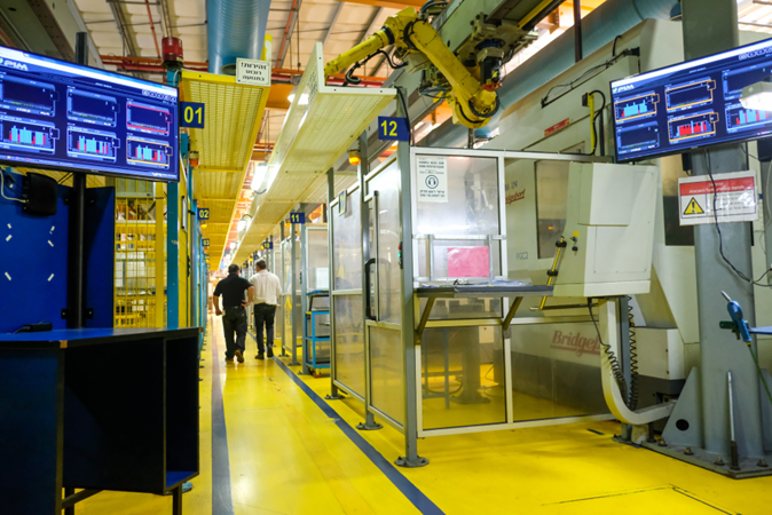
The plants keep their floor view: live status, today’s output and the reasons for today’s stops on screens by the line, in Spanish in Mexico and in Italian in Italy. The group sees the same machines in the same system, aggregated by plant, process and product family, with the same definitions underneath. Nobody re-types anything into a monthly pack. The number the plant manager sees on Monday morning is the number the operations director sees at the quarterly review.
This is already running for a global corporation with plants in Europe, the Americas and Asia. It did not start as a corporate programme: one plant connected a few machines, and the others followed because the method could be repeated without a project. It is the same visibility an OEM gets into its supplier plants, applied to a group’s own sites.
What the comparison is for
A comparable number is not the goal. The conversation it makes possible is. The first thing most groups discover is that the plant everyone thought was best is best at some things and not at others. One plant has short changeovers and long unplanned stops; another has the reverse. In our experience the fastest improvements in a group come from exactly this: a practice that already works in one plant, moved to another, with the data to show that it worked.
The second discovery is less comfortable. Measured from the machine, availability is lower than the monthly packs said, in every plant, because the short stops no log sheet ever captured are now counted. That is not bad news. It is the real starting point, the same one for everyone, which removes the argument about whose figure is right.
What we learned
- Agree the definitions before the first dashboard, not after. It takes one meeting up front and months once every plant has seen its own number.
- Start with one cell per plant, not the whole group. Three plants with one connected line each give a comparable picture within two weeks.
- Let the plants own the reasons. Common categories from the group, local reason codes in the local language. Reasons dictated from head office stop being entered.
- Use the comparison to move practice, not to rank people. Ranked plants stop sharing; plants asked to explain what works start teaching.
- Keep the method identical everywhere. The view is comparable because every machine was connected the same way; the moment one plant goes through its PLCs and another through the IoT device, the argument comes back.
If you run several plants and the monthly pack is the only place they meet, the quickest test is one line in two plants, connected the same way and measured against the same definitions. The comparison usually speaks for itself within a month.
Questions people ask
Why are OEE numbers from different plants in the same group not comparable?
Because each plant built its own reporting: a different line between planned and unplanned downtime, a different source for the number (counters, ERP bookings or paper) and a different base of hours (scheduled, staffed or calendar). The numbers are consistent within a plant but were never designed to be compared across sites.
Does a common reporting template from head office solve it?
In our experience, no. A template changes how the number is written down, not how it is produced. Comparable numbers come from collecting the same signals the same way on every machine and then agreeing the definitions once at group level.
How is a machine in another country connected without an IT project?
A small IoT device sits on the machine's electrical signals; the plant's own electrician installs it in under an hour. There is no PLC connection and no change to programs, so each plant does it itself, the same way, whatever the machine.